Feature · Issue 03
Winter Soil, Quiet Work
A field conversation on compost, cover, and what not to disturb while the ground rests.
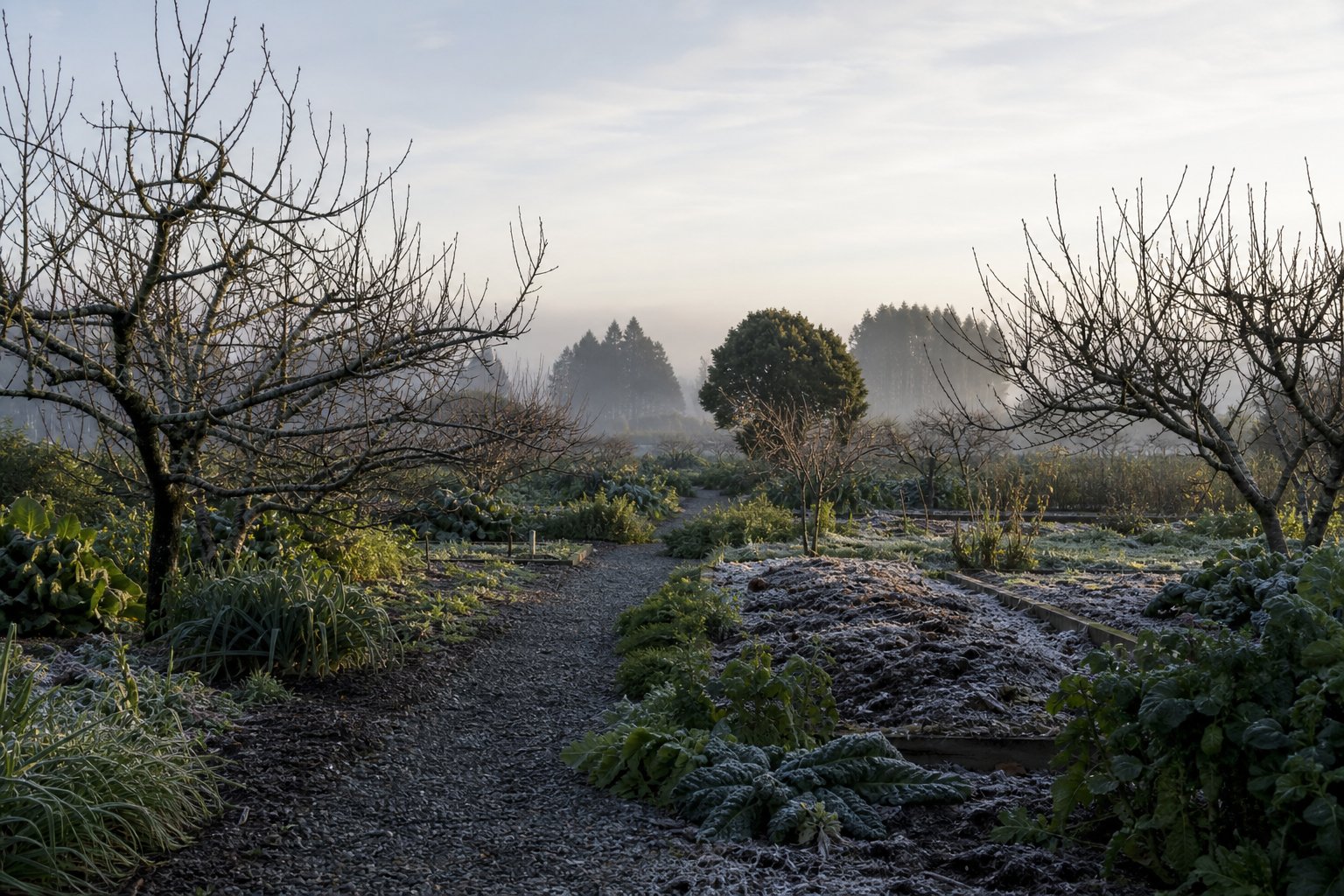
Mid-July on a half-hectare edible block above Te Puke. The citrus is quiet. The compost piles are not. What follows is winter soil practice: cover, cure, and the discipline of leaving structure alone while the ground rests.
The rule for edible landscapes is blunt: feed the ground that will feed you. Canopy and soil are the same project — you cannot prune your way out of dead dirt.
Winter soil notes
Western Bay of Plenty · July
01
What does winter ask of soil here?
Mostly that we stop performing. People want to dig because the weekend is free. The soil wants cover, drainage that works, and time. If beds are mulched and paths firm, winter is already doing the job.
02
Where do new growers go wrong in July?
They rotavate wet ground, or they leave beds bare “to dry out”. Bare soil in a Bay winter is a compaction story waiting for the first truck or boot. Cover crops, leaves, ramial chip — anything living or once-living on top.
03
Is compost still worth turning now?
Turn if the pile is cold and anaerobic. Otherwise leave it. Build in autumn, finish turning by early winter, then let heat and worms finish. Spring gets the product. Winter gets the patience.
04
One rule for edible landscapes?
Feed the ground that will feed you. Canopy and soil are the same project. You cannot prune your way out of dead dirt.
Edible LandscapesBare soil in a Bay winter is a compaction story waiting for the first boot.
A winter soil sequence
-
Walk the wet spots
After rain, mark where water sits. Fix paths and outlets before you add organic matter that will sour in puddles.
-
Cover every open bed
Leaf litter, unfinished compost, or a living cover. No naked soil through July and August.
-
Cure, do not force
Finish compost piles that need air. Leave the rest. Spread only what is ready; stockpile the rest under a tarp edge-open for breath.
-
Plan spring understorey
Use the bare-branch view to decide where soft fruit and herbs will sit once light returns. Pencil it. Plant later.